I have never been a big fan of Spring. I realize now starting the article this way seems counterintuitive, but I’d like to be as honest as possible from the get-go. I feel justified in my thoughts, because unlike what Vivaldi tries to describe in “The Four Seasons” concerto, spring in Indonesia is wet. Our flowers don’t bloom, nor do our plants bear fruit – that’s reserved for Summer. It mostly just rains. Heavily, might I add.
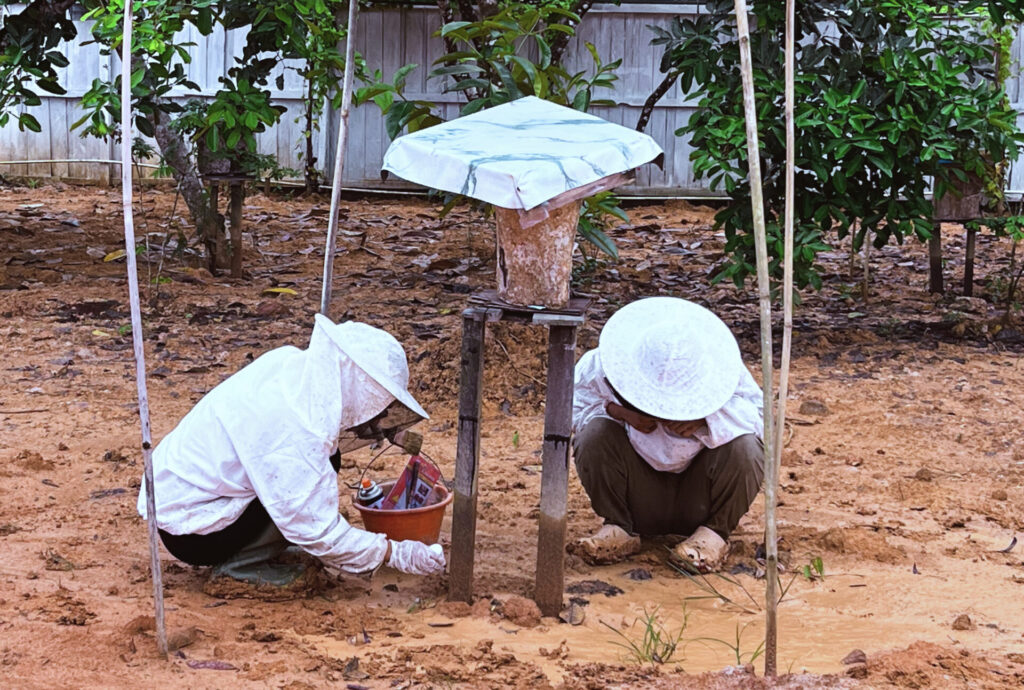
Beekeepers strengthening the log stand after heavy rain – AMS farms
I have spent many Lunar New Years drenched in rain and worry, and this one particular year operations at the farm were just starting. The week before we had ordered 150 seedlings and saplings to be planted on site. I saw it fitting to start planting, since Lunar New Year in Chinese tradition is celebrated to welcome spring – a metaphor for new beginnings. It was a poorly calculated symbolic move, however, because the morning of 2025’s Lunar New Year, Herry – our field manager – called to tell me the site flooded. A week’s worth of heavy rain mixed with high tide had killed more than half of the plants on our farm.
“This is good luck!”
To say I was ‘in a bad mood’ was an understatement. No amount of tradition and custom dictating that I wasn’t supposed to be in a sour mood during Lunar New Year would stop me from pursing my lips that day. My mother, however, was uncharacteristically chipper. I watched as the wind blew huge droplets of rain on the usually high-strung woman’s face, and her smile grew wider. “This is good luck! There’s going to be a strong flow of fortune for us this year!”
Whether or not that age-old belief is true, seeing my mother relax under the storm made me realize – there was a lesson to be learnt from her optimism. In many ways, spring is the season most identical to nature – it’s awfully unpredictable, but not without its surprises. As the flood receded, it left behind deep puddles in a specific ‘difficult’ section of the farm. Before the flood, our farmers noticed that tilling the soil there was especially difficult, and the roots of newly planted saplings would rot because of poor soil drainage. The left-over puddles after the flood gave confirmation to our farmers – the ground surface level there is ever so slightly lower compared to the rest of the land.
Herry and I spent quite some time staring at the deep puddles. None of us realized that the reason why that area was so fussy was because all the water – whether from rain or our own hoses – would drain to that one area. An issue previously hidden to even the land surveyors we hired to map the contours of the land. A microscopic difference with huge tangible impacts to those working on the land revealed after a ‘disaster’. We immediately started filling and levelling the ground after; a process that took us weeks, because the rain kept on halting our trucks. Despite everything, though, we’re mostly just relieved that we identified the root of the issue (pun intended).
Progress Demands Versatility
I have since grown to appreciate Spring Showers more after the incident. Although still a bother – constant rain halts construction, and we still worry about the possibility of floods – we’ve learned to work with it. Our farmers get to check ‘watering the plants’ off their daily to-do-list, we get to save costs on water, and it’s become a wonderful alternative water source (we collect rainwater to prepare for long, dry summers). Our deadlines aren’t met because of unpredictable weather, but the folks at AMS Farms are now better at differentiating between aspects that we can control, and the forces of nature (she’s a rowdy one).
Sometimes (most of the time) things don’t go our way. All the meticulous planning gets washed away once rain falls, but isn’t adapting an integral part of growth? And is flexibility not the core of adaptation? A lesson I grasped only after going through at least two rainy springs on the farm, which is surprising considering that our operations run on very strict sustainability principles. You live and learn – I suppose – and you change accordingly.
Spring has taught me that maintaining a… transformative way of thinking is essential. A constantly changing environment can be pesky, but progress demands that we be versatile. There’s a certain level of rigidness and discipline we have to keep, but being too firm in your plans when the situation demands otherwise will break you. Keeping an open mind helps channel frustration into new opportunities. The weather’s wet and the soil is sticky, but dust is washed away from our porch, and our farmers get to sit and enjoy the cooler air. They aren’t sure when the rain will stop, but at that moment the soil is fed, and the field hums with life.
Now that you know what spring is like in Indonesia, click here to read what Ellen’s experience is like in Germany.